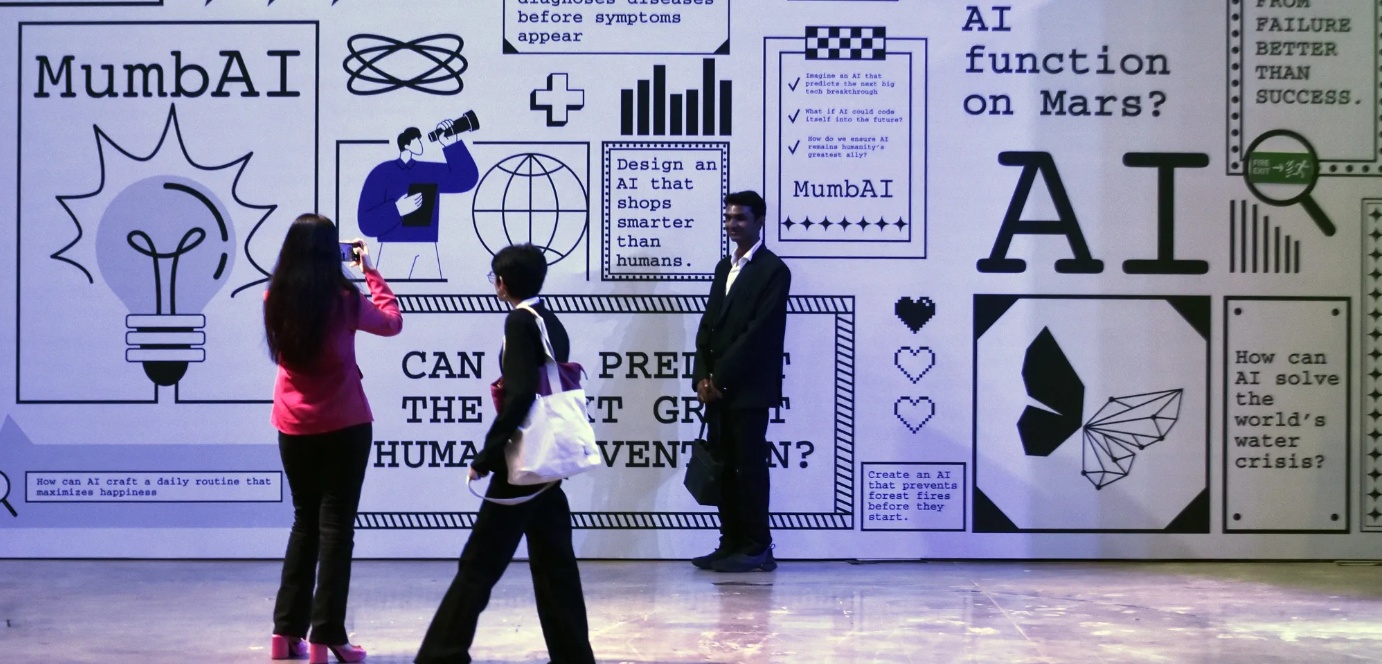
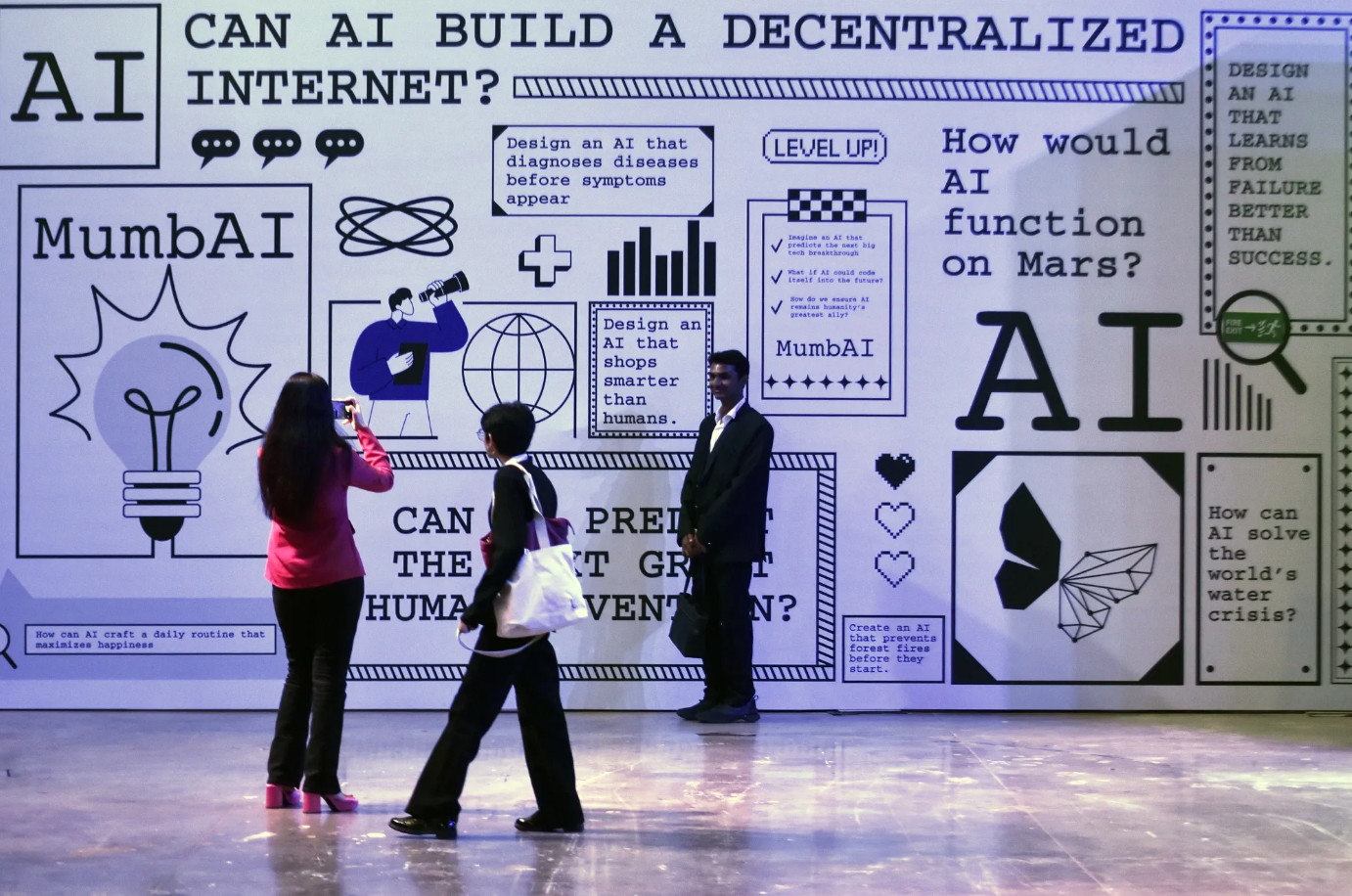
The AI industry giants are betting on India, India, or the most stable bet of the AI era.
Almost everyone is looking for the next AI windfall, whether it be energy-rich sites that can operate data centres at low cost, semiconductor supply chain bottlenecks that will yield windfalls, or companies that may have breakthrough algorithms. As a rule, India would not be present in such discussions: although it had undertaken several large data centre projects, high energy costs and the Indian market environment limited its AI development ambition. India, however, is perhaps the largest and best bet of the AI era.
According to Bloomberg, in recent months, a number of AI giants have opened their fee-paying services in India free of charge: OpenAI’s light version of ChatGPT Go plans to provide one year free to Indian users; Alphabet’s Gemini Pro will open for 18 months to the 505 million users of Faithful Gio; and Perplexity AI will provide a professional version to 350 million users of Bati Telecommunications. Two of them chose to work with telecommunication operators, partly with a view to building a scale effect — – No market can provide such a large user base as India, where the acceptance of technology is particularly rapid. For telecommunications companies, they are always looking for products that can be tied to subscription packages. However, analysts noted that the strategy was different: they promoted AI value-added services as a practical tool rather than an entertainment package. What happens when we stand at the start of a global-level social experiment where free, unrestricted, front-line AI is extended to over 1 billion mobile subscribers?
The Indian authorities are well aware of their expectations: this may be the country ‘ s ultimate opportunity to break the long-term dilemma of low-skill, low-productivity and balanced. Despite the bright economic growth figures, it is largely driven by a few high-productivity industries – I don’t know. The vast majority of workers are in the self-employed or informal sector and, according to ILO data, their productivity is only half the average. Last month, the Indian Government’s think tank, NITI Aayog, noted in the AI Thematic Report that AI is expected to triple the productivity of regular workers over the next decade, from $5 to $15 per hour. Officials calculated that the widespread adoption of AI by 2035 would contribute an additional $500 to $600 billion to the Indian economy. There is optimism in New Delhi, but this number is likely to be overestimated on the basis of idealistic assumptions. The cruel reality is that all previous attempts to upgrade the skills of hundreds of millions of Indian youth have failed. Bloomberg journalist Andy Muhaki stated that India ‘ s entry-level white collar position was at the same risk of being replaced as elsewhere. But official optimism about the technological revolution is not entirely unfounded. Young people in India are not only passionate about technology, but also rare language users. Almost every teaching video on YouTube is produced by Indians and directed to the Indian audience, precisely because we are used to giving priority to finding answers on video sites.

This desire for knowledge is almost tailored to the age of language models. We know that LLMs can pull the skill curve: people who have never written Python code may suddenly be able to build a decent web site, and friends who are not familiar with complex legislation may suddenly read obscure government forms. This phenomenon has become apparent on the Internet, with tens of thousands of Indian certified accounts, such as the X platform, replete with the emblematic grammar of ChatGPT, which is still highly interactive. This may be uncomfortable or even frustrating, but it does work. Similar developments will take place in the real world: Indians will be able to analyze past incomprehensible statements and gradually learn their own new systems, thus overcoming the flawed education system. The perspective of Hindi or Marathi users will be expanded, as they can switch from one another in a multilingual society and even provide services across deep cultural divides. Businesses such as OpenAI seem to have learned that there are more than one way in which a country provides AI infrastructure. While data centres, power plants and semiconductor plants are important, ultimately the most critical element is people, which is the richest in India.

So perhaps the most ambitious AI layout in the world is India itself: not as a chip manufacturer or algorithm owner, but as a participant in all other links; not in a particular area, but in all industries. If language models can really lower the threshold of access to capacity, and if they can truly empower groups that lack the skills and resources, the country’s hundreds of millions of inefficient workers will be the most influential growth story in the world. The Government of India has failed to empower its people or to provide them with sufficient skills. Maybe now it’s time for big language models to try.

Related Posts

Greece banned social media for children under 15 from 1 January 2027
The installation of global mobile game applications decreased by 3 per cent per year and the volume of conversations increased by 1 per cent in 2025