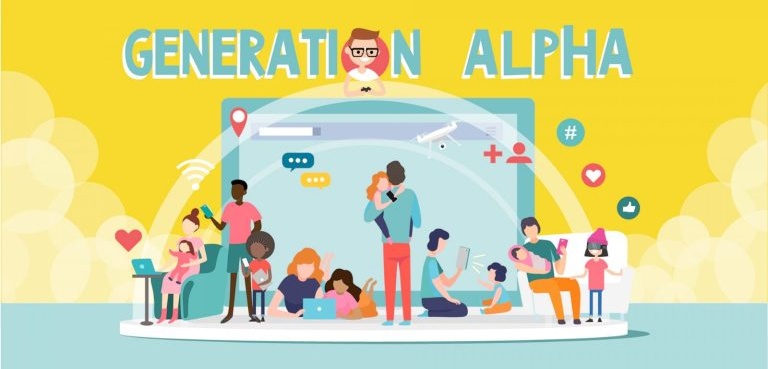
From games, content creation to business decision-making, the A generation reshaped the Indian consumer economy
According to the Wealth magazine, a recent report released by the venture capital company, Rukam Capital, indicates that the Indian consumer economy is undergoing a fundamental change under the influence of the Alpha generation (hereinafter ” the A generation ” ). This generation grew up in an unprecedented era, with rich digital tools, content ecosystems and peer network resources. Young consumers are no longer passive participants in household decision-making, but are active influencers and are redefining the relationship between consumers and brands in the various categories. Rukam Capital highlighted the scale of early digital exposure in a report entitled Decoding the A Generation: Dynamic Relationships between Consumers and Brands. Nearly 73.5 per cent of children already have smartphones, which allow them independent access to content, games and social ecology. In particular, the game has developed into an important social layer where interaction with the good affects their preferences, behaviour and even brand recognition.

This digital insulation directly affects the business sector. The study found that nearly 81 per cent of children were accompanying their parents on online platforms such as Amazon and Flipkart. The role played by children is no longer just passive browsing, and they are increasingly involved in shopping car commodity decisions, affecting commodity choices and, in some cases, even initiating purchases. This marks a major shift in household consumption patterns, and decision-making is becoming more collaborative and digital. Branding awareness has also developed earlier than ever before. The report indicates that 40-46 per cent of children have shown preference in such items as clothing, toys and snacks. This early brand impression suggests that the window in which a firm now earns consumer loyalty has been significantly shortened and that brands are exposed far earlier than traditional marketing goals. The uniqueness of the A generation lies not only in their greater choice but also in their autonomy. The report mentions that this generation is trying to balance autonomy and parental supervision by purchasing goods in consultation with parents and assessing options with unprecedented maturity.

Financial interest is another emerging feature. Seventy per cent of children expressed an interest in making money by doing household chores or engaging in digital activities, while 45 per cent indicated a desire to earn money independently. However, this early financial activity is still developing, with only 14 per cent of children expressing a habit of sustaining money. This change has been noted by the industry. The most rapidly growing digital child content platform in India, Baby Billion, points out that content consumption is now the main driver of brand discovery and preference. The co-founder and Chief Operator of Baby Billion, Akshit Chaudhary, said that children were discovering brands, roles and products through content ecosystems (especially YouTube) and converting them into real-world preferences. According to Akshit Chaudhary: “The content is no longer merely entertainment, but an engine of discovery. Children not only decide what to watch, but also influence the family’s purchasing behaviour, from learning tools to means of life, without exception.” According to Akshit Chaudhary, the trend towards shared viewing is also growing, and it is becoming more common for family members to view content together. This trend has contributed to the resonance of branding with children and parents, blurring the boundaries between recreation, education and business. In particular, there is a strong demand for integration content, combining learning and interaction, which reflects a shared evolution of parental expectations and child preferences.
This change has long gone beyond the front line of cities. Broader research by Rukam Capital shows that digitalization of cities on the second and third line is accelerating similar changes in consumption behaviour, and that brands are increasingly dependent on video, content creators and community recognition, as opposed to non-traditional advertising. Consumers in different regions have increased their focus on authenticity, relevance and resonance, marking a shift from a celebrity voice marketing model. For brands, this changing market pattern requires fundamental rethinking of strategies. Traditional linear processes of recognition, consideration and purchase are being replaced by a more dynamic ecosystem, shaped by content, peer influence and common decision-making within the family. As the A generation matures, its influence is expected to deepen further, making it one of the most influential groups in India ‘ s next phase of consumption growth.

Related Posts

Meta introduces the “business agent” function: AIS provides services in WhatsApp and Instagram

Marathon sold about 1.2 million copies in weeks, failing to meet Sony and Bungie expectations.