The Japanese government has officially requested OpenAI to comply with copyright regulations. Sora 2 is in the middle of an IP violation.
The Government of Japan formally submitted a request to OpenAI to prohibit its infringement of Japanese copyright content. This is a direct response to Sora 2’s ability to generate video images of the role of animation and games.
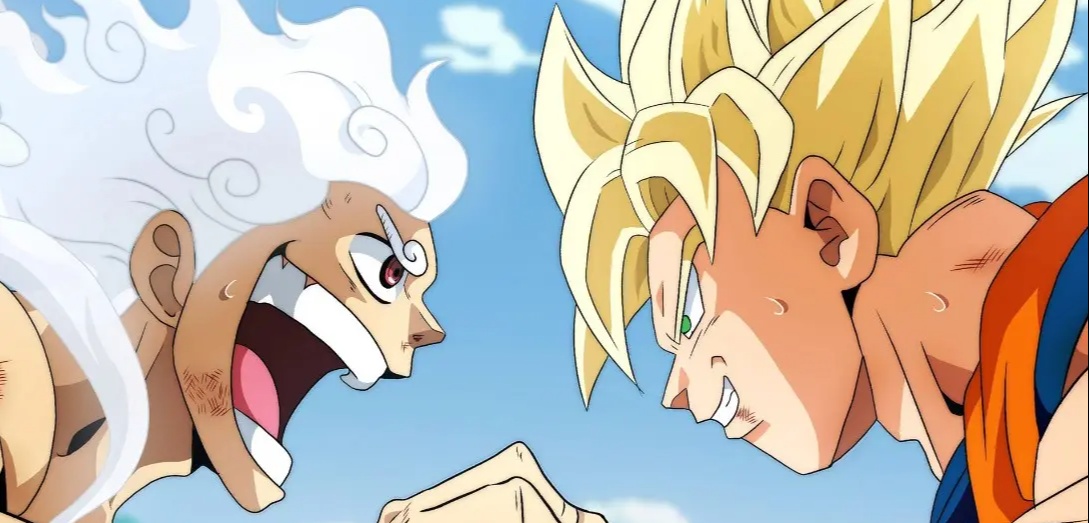
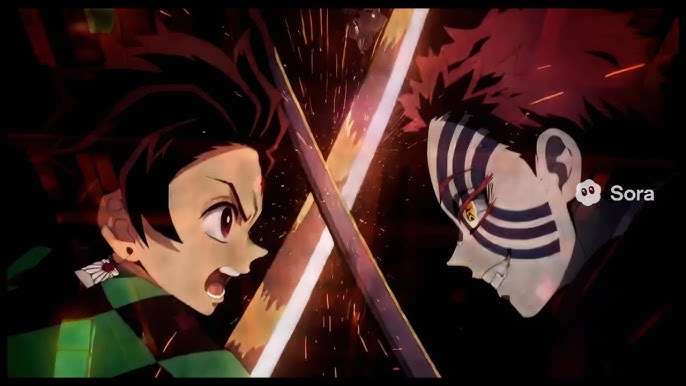
Sora 2 is an AI audio and video generation tool that allows users to automatically generate 20 seconds of 1080P video with audio. Once online on 1 October, a large number of violations from well-known IP characters, such as the King of Pirates, the Ghost Sword, and Mario, were quickly used on social platforms.
In a press conference in the Cabinet Office of Japan, the Minister of State for Intellectual Property and the Strategy of AI announced this request, emphasizing that cartoons and animations are “an irreplaceable treasure for Japan to show the world”. This request has been officially submitted by the Headquarters of the Intellectual Property Strategy of the Cabinet Office through online channels. Inner Minoru and others in the city indicated that they looked forward to OpenAI ‘ s initiative and suggested that, if the problem persisted, corresponding measures might be taken under the Japan ‘ s AI Promotion Act.
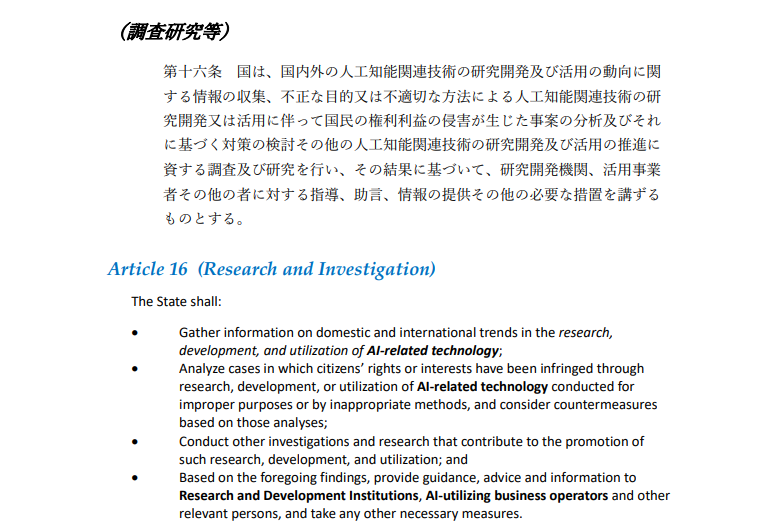
Japan ‘ s AI Promotion Act, which entered into force on 1 September 2025, aims to promote socio-economic growth through the promotion of AI ‘ s development references, but at the same time establishes principles for dealing with AI abuse, including abuse. Article 16 of the Act empowers the Government to investigate and formulate responses to cases of improper use of AI against citizens’ rights and interests, although the Act does not provide for clear penalties, as indicated in the Forum for the Use of Private Forum, and relies mainly on voluntary cooperation from enterprises.
JFDP Member of Parliament Salaki has long provided an in-depth analysis of the legal issues involved in Sora 2 in his official X account number, noting that “the release of Sora 2 has once again highlighted the conflict between AI and copyright”, while stressing that “Japan, as a country that conquers the world with animated games, has the responsibility to take the lead in rule-making”. Reuters reported on 29 September that OpenAI had contacted a number of studios and brokers to provide exit options a week prior to Sora 2, but did not disclose a specific list.
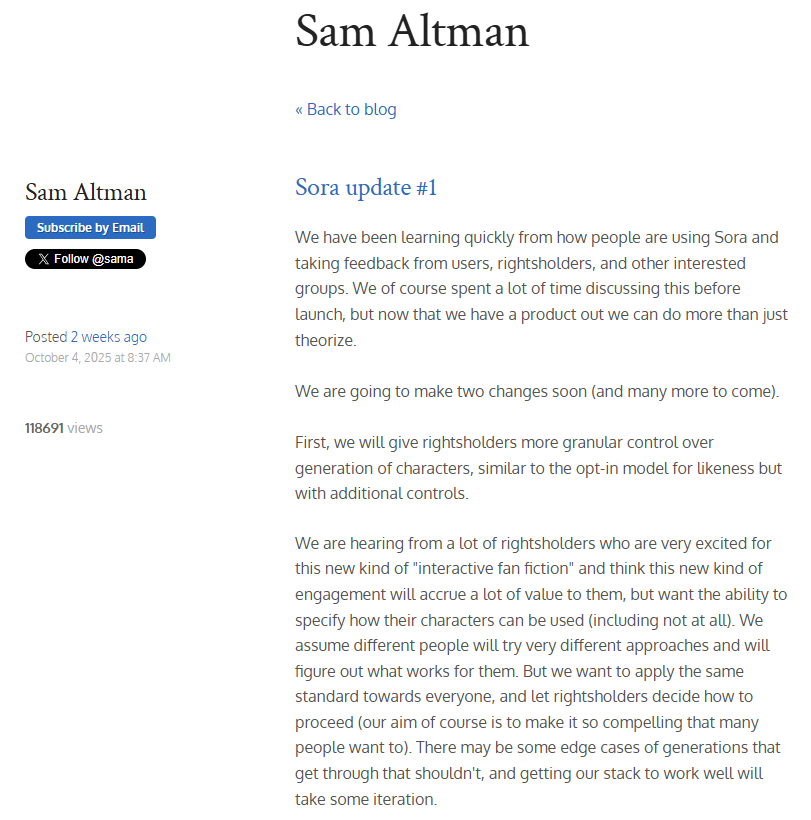
Although CEO OpenAI Sam Altmann promised in his blog on October 4 that he would give copyrighters “control over more sophisticated roles”, including a total ban on the use of options, and paid special tribute to “Japan’s outstanding creative output”, at present OpenAI has not responded to the official request of the Japanese government.
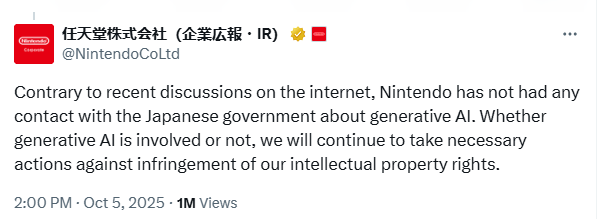
At the beginning of this month, Nintendo issued a rare statement denying the rumours of contacts with the Government of Japan on the creation of an AI, but stressing that “whether or not the creation of an AI is involved, the necessary measures will be taken against the violation”. Disney and Globe have filed a lawsuit against Midjourney, the AI Image Generation Company, for improper use of the film role. Disney also sent a restraining letter to Character.AI to stop the violation.
Mark Lemley, Professor at Stanford University, United States of America, stated to CNBC that “the majority of these cartoon role videos generated by users will constitute copyright infringement, and OpenAI will be exposed to a large number of litigation”. Last month, Bocomb also issued a statement on the unauthorized use of smart images and theme songs in law enforcement videos by the United States Department of Homeland Security, stressing that it was not involved in content creation and was not authorized to use IP.

Related Posts

Meta introduces the “business agent” function: AIS provides services in WhatsApp and Instagram
From games, content creation to business decision-making, the A generation reshaped the Indian consumer economy