
Indian gold game applications are experiencing a drop in downloads! Fan.
On 22 August, Prime Minister Moody of India formally signed the Online Game Promotion and Regulation Act 2025, which will ban the gold game industry in all its aspects while establishing legislative support for the Indian electric competition industry. According to the Economics Times of India, since the introduction of the Act, there has been a cliff drop in downloads from the Indian genuine gold game (RMG).
Data published by AppTweak, an applied data company, shows that the number of new installed applications for Zupee, Winzo, Mobile Premier League (MPL) and PokerBaazi has declined by 60 to 95 per cent since the Bill was introduced in the Wolesi Jirga and adopted. During the period from 20 to 30 August, Winzo received an average of 459,000 downloads per day, a 69.7 per cent decrease from the pre-prohibition level; Zupee installation, supported by Z47, dropped by 95 per cent to 3490 per day; and MPL Rami and Dream Sports game downloads declined by 73 per cent to 367 per day. However, Dream sports platform Dream11 has grown in reverse. After an initial slowdown, average daily downloads stabilized at about 485 000, up from about 25,000 before the ban.
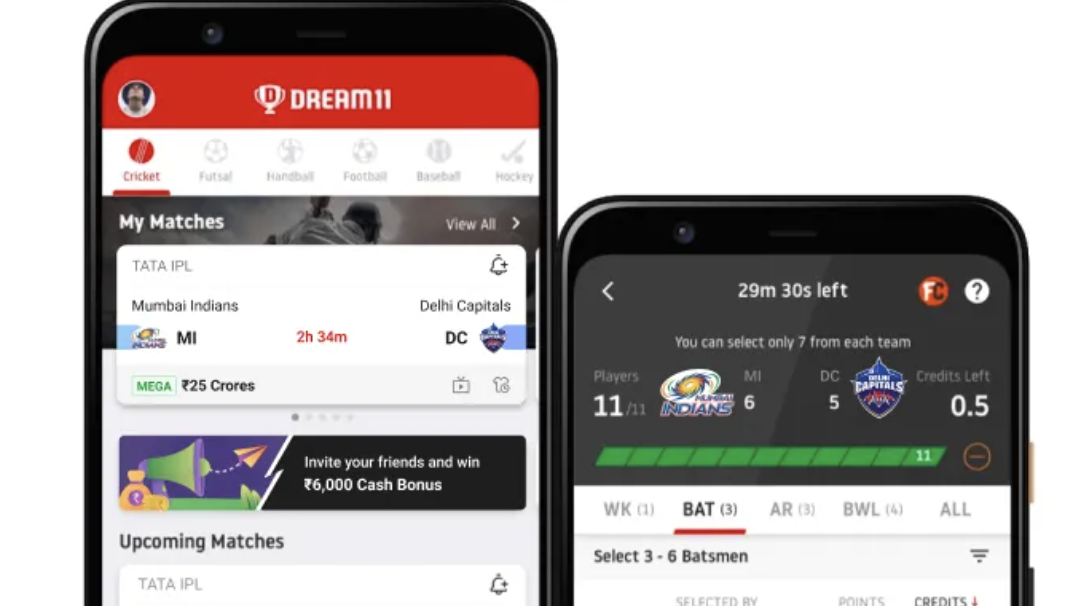
Currently, a number of platforms, including Dream Sports, MPL and Winzo, are moving towards a free game model to mitigate the impact. Prabhudas Lilladher’s chief analyst, Ginesh Joshi, said: “Despite the feasibility of a transition, its gold-absorbing capacity is far less than that of a gold game. Thus, in practice, the old business model has been declared dead.”
As the Indian market revenues were close to zero, a number of related business companies began to reduce their staff. MPL decided to significantly reduce the Indian team after stopping all genuine gold games, and the co-founder, Sai Srinivas, stated in his internal mail that the ban had destroyed his domestic revenue base. Chief Executive Officer Hash Jan, Dream Sports, referred to the legislation as a “fatal blow” evaporating 95 per cent of the group’s income and 100 per cent of its profits overnight. Although the company has closed its gold game business, it will not raise legal challenges to the ban.

Hash Jan stated that while the company’s marketing expenditure will be reduced to zero, at this time no staff cuts are considered: “We have 800 employees who can be redeployed to the areas of sports artificial intelligence, fan interaction and creators’ economy. Each component of the team — technology, design, operation, human resources and law — retains its value. We may need to make some cuts, but talent will be the last asset to be considered for abandonment.”
Other operators, including Zupee and Probo, have also stopped their gold games. These companies were under pressure for a long time after the GST Committee decided in 2023 to levy 28 per cent of the wager amount. Analyst Ginesh Josh added: “Corporates may try to shift to different models, but maintaining the existing cost structure will be difficult if liquidity is compromised during the transition. Retrenchment is a matter of time.”

Despite the challenges posed by most operators to the law, Head Digital Works, which operates the Rami and Poker platform A23, has filed a lawsuit in the High Court of Karnataka, becoming the first gold gamer to challenge the bill. Lawyers representing many games companies revealed that other major manufacturers that initially considered legal avenues were still waiting.

Related Posts

Nintendo accelerates Switch 2 production: the target for the fiscal year is 20 million, 20 per cent higher than publicly expected

Greece banned social media for children under 15 from 1 January 2027